
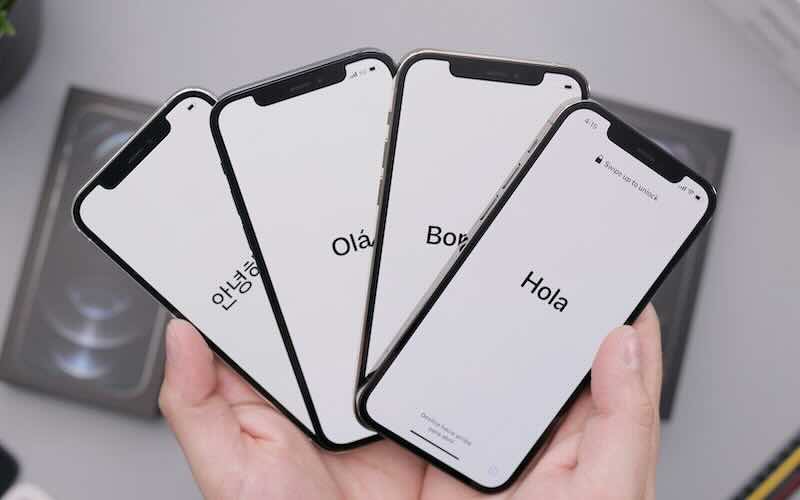
The evolution of the iPhone
Since its debut in 2007, the iPhone has revolutionised the way we communicate, work, and play. Apple’s flagship device has seen remarkable advancements over the years, with each new model pushing the boundaries of technology. If you’ve ever wondered how the iPhone generations have evolved over time and their iPhone release dates, you’re in the right place. Let’s take a journey through the iPhone timeline and explore the list of iPhones in order, from the very first to the latest model!
In this blog:
- The first iPhone (2007)
- The iPhone 3G & 3GS (2008-2009)
- The iPhone 4 & 4S (2010-2011)
- The iPhone 5 Series (2012-2013)
- The iPhone 6 & 6 Plus (2014)
- The iPhone 6S & SE (2015-2016)
- The iPhone 7 & 7 Plus (2016)
- The iPhone 8 & iPhone X (2017)
- The iPhone XR, XS, & XS Max (2018)
- The iPhone 11 Series (2019)
- The iPhone 12 Series (2020)
- The iPhone 13 Series (2021)
- The iPhone 14 Series (2022)
- The iPhone 15 Series (2023)
- The iPhone 16 Series & iPhone 16e (2024-2025)
- Conclusion
The first iPhone (2007)
Apple launched the first iPhone in 2007, changing the mobile industry forever. It introduced a 3.5-inch display, a touchscreen interface that eliminated the need for a physical keyboard and a 2-megapixel camera. While it lacked features like an App Store or front-facing camera, it laid the foundation for what would become the world’s most popular smartphone.
The iPhone’s minimalist design, combined with its multi-touch capabilities, set it apart from the clunky mobile devices of the time, marking the true beginning of the iPhone evolution.
The iPhone 3G & 3GS (2008-2009)
Next on the iPhone timeline is the iPhone 3G, released in 2008. It brought high-speed 3G connectivity, making web browsing and email much faster. More importantly, it introduced the App Store, allowing users to download third-party applications that expanded the phone’s capabilities significantly. The following year, the iPhone 3GS arrived with a faster processor, improved battery life and video recording capabilities – features that made it one of the best-selling smartphones of its time.
The iPhone 4 & 4S (2010-2011)
The iPhone 4 was a major leap forward in both design and functionality. Unveiled in 2010, it featured a stunning glass and steel body, a high-resolution Retina display and a front-facing camera that introduced FaceTime video calling.
The iPhone 4S followed in 2011 with an improved A5 chip for faster performance and the introduction of Siri, Apple’s first AI-powered voice assistant. This was also the first iPhone to include iCloud, enabling seamless data syncing across devices.
The iPhone 5 Series (2012-2013)
The iPhone 5 launched in 2012 with a larger 4-inch display, a thinner and lighter body, and Apple’s proprietary Lightning connector, replacing the 30-pin dock. It also supported LTE for faster mobile internet speeds.
The iPhone 5S launched later in 2013 introducing Touch ID, a fingerprint sensor built into the home button, enhancing security and convenience. Alongside it, Apple released the iPhone 5C, a colourful and slightly cheaper alternative, marking Apple’s first attempt at diversifying its product lineup.
The iPhone 6 & 6 Plus (2014)
In 2014, Apple embraced larger screens with the iPhone 6 (4.7 inches) and iPhone 6 Plus (5.5 inches). These models also introduced Apple Pay, allowing users to make contactless payments with their iPhones. The slim, rounded design made these devices more comfortable to hold and improved camera technology, making mobile photography even better.
The iPhone 6S & SE (2015-2016)
The iPhone 6S, launched in 2015, introduced 3D Touch, which allowed users to interact with their screens through pressure-sensitive gestures. It also featured a 12MP rear camera and 4K video recording. In 2016, Apple added to its iPhone generations with the release of the iPhone SE, which packed the power of the iPhone 6S into the beloved smaller design of the iPhone 5, catering to users who still preferred compact devices.
The iPhone 7 & 7 Plus (2016)
Apple made a controversial decision in 2016 by removing the headphone jack from the iPhone 7 and 7 Plus, pushing users toward wireless audio solutions like AirPods. However, the iPhone 7 Plus introduced dual cameras for the first time, enabling 2x optical zoom and the now-iconic Portrait Mode for professional-looking photos with blurred backgrounds.
The iPhone 8 & iPhone X (2017)
To celebrate ten years of the iPhone, Apple launched both the iPhone 8 series and the game-changing iPhone X. While the iPhone 8 and 8 Plus stuck to the classic design but added wireless charging, the iPhone X ditched the home button entirely. It introduced Face ID for secure facial recognition, an edge-to-edge OLED Super Retina display and the powerful A11 Bionic chip.
The iPhone XR, XS, & XS Max (2018)
The iPhone XS and XS Max were released in September 2018, bringing several key upgrades, including the A12 Bionic chip, a Super Retina OLED display, and an improved dual-camera system with Smart HDR. The XS Max featured the largest display ever seen on an iPhone at the time, measuring 6.5 inches. Both models supported dual SIM functionality and improved battery life over their predecessors.
Shortly after, Apple added a new model to its list of iPhone generations. In October 2018, Apple introduced the iPhone XR, offering a more affordable alternative to the XS models. The XR featured an LCD Liquid Retina display instead of OLED but kept Face ID and Apple’s A12 Bionic chip, delivering excellent performance at a lower price point.
The iPhone 11 Series (2019)
The iPhone 11 lineup improved cameras dramatically, introducing Night Mode for stunning low-light photography. The Pro models featured a triple-camera system, including an ultra-wide lens, giving users more versatility in their shots.
The iPhone 12 Series (2020)
In 2020, Apple reintroduced a flat-edge design reminiscent of the iPhone 4, added 5G connectivity for ultra-fast internet speeds, and brought back MagSafe, a magnetic charging system that also enabled snap-on accessories. Apple also introduced their first ever Mini model, with the iPhone 12 Mini sporting a compact 5.4‑inch display.
The iPhone 13 Series (2021)
The iPhone 13 improved battery life, added a smaller notch for more screen space and introduced Cinematic Mode, a feature that allowed users to create movie-like depth-of-field effects in videos. Like the iPhone 12 series, the iPhone 13 also came with a Mini model.
The iPhone 14 Series (2022)
Released in 2022, the iPhone 14 didn’t offer too many updates compared to its predecessor – it came with the same display, cameras and A15 Bionic Chip. However, Apple did introduce Emergency SOS via satellite and crash detection, making the device a potential lifesaver in emergencies.
Apple decided to ditch the Mini model for the 14 series, choosing to add an iPhone 14 Plus model instead with a 6.7-inch display. The Pro models also debuted a new feature, the Dynamic Island, an interactive notch replacement that displayed alerts and notifications seamlessly.
The iPhone 15 Series (2023)
With growing pressure from regulators, Apple transitioned to USB-C charging in 2023, finally unifying its charging ports with other devices. The iPhone 15 Pro models also swapped out the Silent switch for a new Action button and introduced a titanium frame, making them lighter and more durable than ever before.
All iPhone 15 models incorporated the Dynamic Island feature that the iPhone 14 Pro models had. In 2024, Apple launched Apple Intelligence, a new AI software to simplify and accelerate everyday tasks, for the iPhone 15 Pro models and the latest iPhone 16 series.
The iPhone 16 Series & 16e (2024-2025)
In 2024, Apple released their latest iPhone series – the iPhone 16. All iPhone 16 models came with the Action button featured on the iPhone 15 Pro models, along with a new Camera Control button for even faster access to the camera and easier shooting. The iPhone 16 and 16 Plus featured a new A18 chip, while the Pro and Pro Max models boasted a newer and more powerful A18 Pro chip. Later in 2024, Apple launched Apple Intelligence for all iPhone 16 models.
In early 2025, Apple also released the iPhone 16e, their most affordable new iPhone model to date. Despite being a budget model, it has some great features, including Face ID, Apple Intelligence and the A18 chip. The iPhone 16e has a simplified 2-in-1 camera system and lacks other features such as MagSafe charging, the Camera Control button and the Dynamic Island.
Conclusion
Looking back at the iPhones in order, it’s amazing to see how far we’ve come since 2007. From small screens to edge-to-edge displays, from Touch ID to Face ID and from 3G to 5G, the iPhone timeline is a testament to Apple’s innovation. Whether you’re reminiscing about your first iPhone or eagerly awaiting the next iPhone release dates, one thing’s for sure – the iPhone’s evolution is far from over!
Ready to upgrade your iPhone? Switch to a refurbished iPhone and save £100s vs buying new! Plus, you can trade in your old iPhone for cash to make your upgrade even cheaper. If you’ve got an iPhone 17 that you no longer want, you can sell it with us and we’ll give you quick cash for it! You can sell your iPhone 17, sell your iPhone 17 Pro, trade in your iPhone 17 Pro Max or trade in your iPhone Air with us and we’ll pay you as soon as we receive your device.






Recent Comments
on Which British artist has sold the most albums?
on Who is the most popular video game character (based on sales)?
on Which British artist has sold the most albums?
on COVID-19 update: We’re here to help you work, connect and play from home
on COVID-19 update: We’re here to help you work, connect and play from home