










Item out of stock
Selling fast! Item low in stock
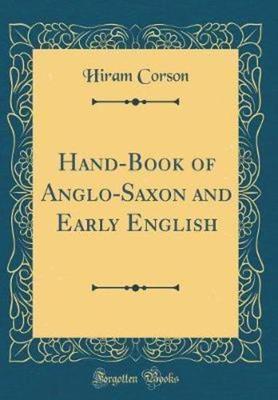
Hand-Book of Anglo-Saxon and Early English (Classic Reprint) - Hiram Corson
Oops!
Unfortunately it looks like someone took the last one.
Unfortunately it looks like someone took the last one.
No worries, we have many more interesting finds for you.
Browse similar
Why choose musicMagpie?
Title
Hand-Book of Anglo-Saxon and Early English (Classic Reprint)
Hand-Book of Anglo-Saxon and Early English (Classic Reprint)
Author
Hiram Corson
Hiram Corson
format
Hardback
Hardback
Publisher
Forgotten Books
Forgotten Books
Language
English
English
UK Publication Date
20180212
20180212
Description
Excerpt from Hand-Book of Anglo-Saxon and Early English That is, To me it seemeth better, if to you so it seem eth, that we cause, as we full easily may with God's help, if we the repose have, that all the youth that now is in the Angle-stock of free men, of those that the means have, be to learning put, the while that they none other business ne can, till first that they well can English writing read. Let one teach afterward further in Latin speech those that one further teach will, and to higher hood advance will. The importance, moral and intellectual, to the individ ual, to society, and to the state, of a thorough cultivation of the vernacular tongue, will soon, it is hoped, be fully and practically recognized by all educators and institutions of learning. What Thomas De Quincey, the greatest mas ter of English prose that this century has produced, the greatest, perhaps, produced by any century, has said in regard to the young pot/zr obligation to attain to purity, precision, compass, and idiomatic energy of diction, is scarcely less applicable to every young man who would reach the highest culture of which he is capable. If, he says, in his somewhat ungenerous essay on the poet Keats, there is one thing in this world that, next aer the ag of his country and its spotless honour, should be wholly in the eyes of the young poet, - it is the language of his country. He should spend the third part of his life in studying this language and cultivating its total resources. About the Publisher Forgotten Books publishes hundreds of thousands of rare and classic books. Find more at www.forgottenbooks.com This book is a reproduction of an important historical work. Forgotten Books uses state-of-the-art technology to digitally reconstruct the work, preserving the original format whilst repairing imperfections present in the aged copy. In rare cases, an imperfection in the original, such as a blemish or missing page, may be replicated in our edition. We do, however, repair the vast majority of imperfections successfully; any imperfections that remain are intentionally left to preserve the state of such historical works.
Why buy with musicMagpie?

FREE 12 Month Warranty on Tech

Magpie Certified Refurbished Tech

FREE Delivery on ALL Orders

14 Day Money Back Guarantee

90 Point Refurbished Quality Check
If you’re looking for something new to listen to, watch or play, look no further than the musicMagpie Store. We sell over half a million new and used CDs, DVDs, Blu-Rays, Games and Vinyl, spanning all kinds of genres and consoles, with prices starting from just £1.09! We also sell a wide range of refurbished Mobile Phones and Tech from major brands like Apple, Samsung, Sony, Microsoft and much more. With a 12 month quality warranty, you can save with total confidence.