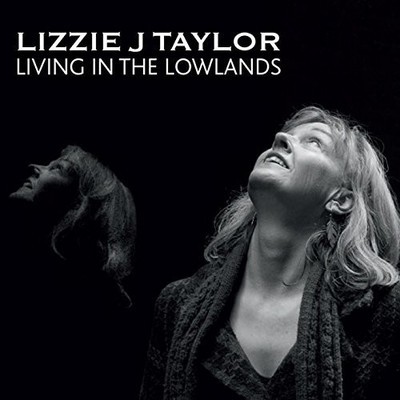
Description
Reviews for Living in the Lowlands... Mike Davies, Folk Radio UK: 'Other than she's apparently based in Cambridge and also plays guitar in local bluegrass outfit The Woodberrys, I know absolutely nothing about Lizzie J Taylor. However, Living In The Lowlands, her debut album, speaks eloquently on her behalf. Produced by Nick Barraclough, who also contributes on backing vocals, pedal steel and mandolin, with duo partner Mark Gamon on guitars, it slots comfortably into the burgeoning new acoustic scene, Taylor proving both an accomplished writer and vocalist. On the scurrying opener Leaving Like The English, it's hard not to find yourself likening her to Thea Gilmore, a comparison that also holds true on the more trad folk and blues inclined One Thousand Times Untrue, which comes with unaccompanied intro. On the other hand, I Sing, a duet with fellow Woodberrys Sue Pomeroy, is very much in the vein of harks to plantation songs like Shortnin' Bread and English children's folk tunes such as Froggie Went A Courtin' while the poignant Red Headed Daughter, has all the hallmarks of classic Jackson Browne. All but one track was recorded in Cambridge, the exception being gentle acoustic ballad Lowlands, which was put down in Glasgow with Mark Freegard behind the desk and featuring Boo Hewerdine on guitar. She and Hewerdine clearly got on well, the pair of them co-writing Prayers, a simple song of love and faith. Generally speaking, the songs centre around matters of the heart; but the final two numbers strike more intriguing notes The Navigator, written about a WWII bomber navigator that touches on the cyclical nature of history, and Peter My Brother, a heart-rending tale of an older brother, who put aside 'keyboard jazz and blues' to play with guns and knives instead in which she sings 'I was the chosen daughter and you the lamb to slaughter'. An impressive debut and, if she has more material of the same calibre and she can shake off some of the more obvious influences, potentially the start of a very fruitful solo career.' David Kidman, FATEA: 'Lizzie's background's a touch obscure, with almost no information available on her website. Based in Cambridge, she's a guitarist and singer-songwriter, and she must be well regarded cos her debut CD's been produced by Nick Barraclough (he also plays mandolin, bass and a touch of pedal steel on the album). Her honest booklet note admits that she went on a songwriting course at New Year 2010, following which she 'went home, bought a guitar and wrote these songs'; and if that's to be taken literally, then this is a pretty amazing first attempt. It takes in a reasonable gamut of inspirations both from the loose Americana genre and from all-round reliable acoustic songwriterdom. Sure, there are occasional rather overt instances of derivativeness, but hey, this is a first stab at the market, and there's more in terms of achievement and promise than many a debut record conceived on a similar amount of experience. The disc opener, Leaving Like The English, which borrows a French expression for leaving without saying goodbye, forms an attractive calling-card in it's own right, and showcases Lizzie's better-than-capable singing voice and aptitude for the rootsier side of the spectrum of the approved s/s idiom. Like the songs that come after, this first track is crafted, lean with no padding, says what it needs to and then gets off-stage with no fuss - and there's nowt wrong with that. Much of Lizzie's material is concerned with romance and it's trials, and Lizzie remains true to the conventions here. Simple and pleasing life experiences form the basis of pieces like One Thousand Times Untrue and the chirpy I Sing, songs which recall Gillian Welch perhaps in their uncluttered expression. The album's well-considered sequence also takes in the poignant love song to a troubled teenager Redhaired Daughter, and, right at the end of the disc, the compass widens beyond the purely personal with The Navigator (the tale of a presumed wartime pilot) and the aching portrait of Peter My Brother. Along the way, to augment Lizzie's plain but sufficiently supportive guitar playing there's some nice instrumental fills courtesy of Nick B (as I mentioned), also Mark Gamon, Robb Appleton, Dave Olney and Jeremy Khan, and the cleanly-recorded backdrops suit sure Lizzie's songs well, with exactly the right amount of presence. And Boo Hewerdine enters the fray at a couple of points, co-writing the eloquent and memorable expression of universal-faith Prayers and enabling one track (the beautiful, gentle Lowlands) to be recorded at his Glasgow studio (where he was able to contribute some guitar lines).'