










Item out of stock
Selling fast! Item low in stock
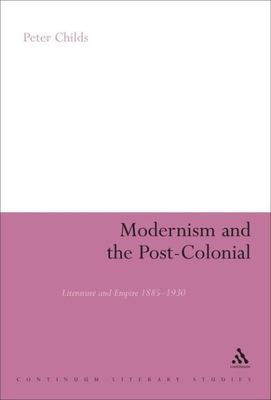
Modernism and the post-colonial - Peter Childs
Oops!
Unfortunately it looks like someone took the last one.
Unfortunately it looks like someone took the last one.
No worries, we have many more interesting finds for you.
Browse similar
Why choose musicMagpie?
Title
Modernism and the post-colonial - literature and Empire, 1885-1930
Modernism and the post-colonial - literature and Empire, 1885-1930
Author
Peter Childs
Peter Childs
format
Hardback
Hardback
Publisher
Bloomsbury Publishing
Bloomsbury Publishing
Language
English
English
UK Publication Date
20070609
20070609
Description
This book considers the shifts in aesthetic representation over the period 1885-1930 that coincide both with the rise of literary Modernism and imperialism's high point. If it is no coincidence that the rise of the novel accompanied the expansion of empire in the eighteenth-century, then the historical conditions of fiction as the empire waned are equally pertinent. Peter Childs argues that modernist literary writing should be read in terms of its response and relationship to events overseas and that it should be seen as moving towards an emergent post-colonialism instead of struggling with a residual colonial past. Beginning by offering an analysis of the generational and gender conflict that spans art and empire in the period, Childs moves on to examine modernism's expression of a crisis of belief in relation to subjectivity, space, and time. Finally, he investigatesthe war as a turning point in both colonial relations and aesthetic experimentation. Each of the core chapters focuses on one key writer and discuss a range of others, including: Conrad, Lawrence, Kipling, Eliot, Woolf, Joyce, Conan Doyle and Haggard.
Why buy with musicMagpie?

FREE 12 Month Warranty on Tech

Magpie Certified Refurbished Tech

FREE Delivery on ALL Orders

14 Day Money Back Guarantee

90 Point Refurbished Quality Check
If you’re looking for something new to listen to, watch or play, look no further than the musicMagpie Store. We sell over half a million new and used CDs, DVDs, Blu-Rays, Games and Vinyl, spanning all kinds of genres and consoles, with prices starting from just £1.09! We also sell a wide range of refurbished Mobile Phones and Tech from major brands like Apple, Samsung, Sony, Microsoft and much more. With a 12 month quality warranty, you can save with total confidence.