










Item out of stock
Selling fast! Item low in stock
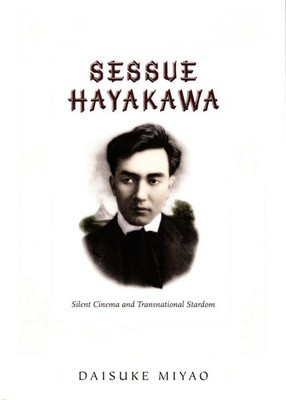
Sessue Hayakawa - Daisuke Miyao
Oops!
Unfortunately it looks like someone took the last one.
Unfortunately it looks like someone took the last one.
No worries, we have many more interesting finds for you.
Browse similar
Why choose musicMagpie?
Title
Sessue Hayakawa - silent cinema and transnational stardom
Sessue Hayakawa - silent cinema and transnational stardom
Author
Daisuke Miyao
Daisuke Miyao
format
Paperback / softback
Paperback / softback
Publisher
Duke University Press
Duke University Press
Language
English
English
UK Publication Date
20070504
20070504
Description
While the actor Sessue Hayakawa (1886-1973) is perhaps best known today for his Oscar-nominated turn as a Japanese military officer in The Bridge on the River Kwai (1957), in the early twentieth century he was an internationally renowned silent film star, as recognizable as Charlie Chaplin or Douglas Fairbanks. In this critical study of Hayakawa's stardom, Daisuke Miyao reconstructs the Japanese actor's remarkable career, from the films that preceded his meteoric rise to fame as the star of Cecil B. DeMille's The Cheat (1915) through his reign as a matinee idol and the subsequent decline and resurrection of his Hollywood fortunes.
Drawing on early-twentieth-century sources in both English and Japanese, including Japanese-language newspapers in the United States, Miyao illuminates the construction and reception of Hayakawa's stardom as an ongoing process of cross-cultural negotiation. Hayakawa's early work included short films about Japan that were popular with American audiences as well as spy films that played upon anxieties about Japanese nationalism. The Jesse L. Lasky production company sought to shape Hayakawa's image by emphasizing the actor's Japanese traits while portraying him as safely assimilated into U.S. culture. Hayakawa himself struggled to maintain his sympathetic persona while creating more complex Japanese characters that would appeal to both American and Japanese audiences. The star's initial success with U.S. audiences created ambivalence in Japan, where some described him as traitorously Americanized and others as a positive icon of modernized Japan. This unique history of transnational silent-film stardom focuses attention on the ways that race, ethnicity, and nationality influenced the early development of the global film industry.
Why buy with musicMagpie?

FREE 12 Month Warranty on Tech

Magpie Certified Refurbished Tech

FREE Delivery on ALL Orders

14 Day Money Back Guarantee

90 Point Refurbished Quality Check
If you’re looking for something new to listen to, watch or play, look no further than the musicMagpie Store. We sell over half a million new and used CDs, DVDs, Blu-Rays, Games and Vinyl, spanning all kinds of genres and consoles, with prices starting from just £1.09! We also sell a wide range of refurbished Mobile Phones and Tech from major brands like Apple, Samsung, Sony, Microsoft and much more. With a 12 month quality warranty, you can save with total confidence.