










Item out of stock
Selling fast! Item low in stock
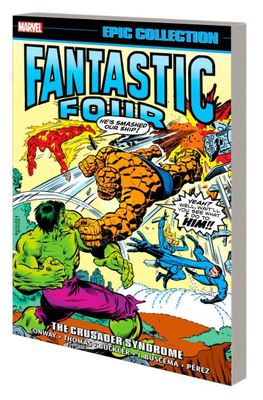
The crusader syndrome - Gerry Conway
Oops!
Unfortunately it looks like someone took the last one.
Unfortunately it looks like someone took the last one.
No worries, we have many more interesting finds for you.
Browse similar
Why choose musicMagpie?
Title
The crusader syndrome
The crusader syndrome
Author
Gerry Conway
Gerry Conway
format
Paperback / softback
Paperback / softback
Publisher
Marvel
Marvel
Language
English
English
UK Publication Date
20230829
20230829
Description
Collects Fantastic Four (1961) #147-167, Giant-Size Fantastic Four (1974) #2-4, Avengers (1963) #127, material from Marvel Treasury Edition (1974) #2. FANTASTIC FOUR stands tall as one of the greatest super-hero series of all time - and it certainly didn't get there by doing the same old, same old! In this Epic Collection, the strained relationship of Reed and Sue Richards takes a turn for the worse. Sue joins Namor in an invasion of New York City - and the Frightful Four pile on, too! Then, the Femizons and Mahkizmo the Nuclear Man begin a battle of the sexes. Next, the Silver Surfer returns - with a vengeance! The Machiavellian Doctor Doom has captured the Surfer's beloved Shalla Bal and used her to turn him against the Fantastic Four! Giant-Size adventures and a royal wedding round it out as the FF prove that nothing is stronger than the bonds of family!
Why buy with musicMagpie?

FREE 12 Month Warranty on Tech

Magpie Certified Refurbished Tech

FREE Delivery on ALL Orders

14 Day Money Back Guarantee

90 Point Refurbished Quality Check
If you’re looking for something new to listen to, watch or play, look no further than the musicMagpie Store. We sell over half a million new and used CDs, DVDs, Blu-Rays, Games and Vinyl, spanning all kinds of genres and consoles, with prices starting from just £1.09! We also sell a wide range of refurbished Mobile Phones and Tech from major brands like Apple, Samsung, Sony, Microsoft and much more. With a 12 month quality warranty, you can save with total confidence.