










Item out of stock
Selling fast! Item low in stock
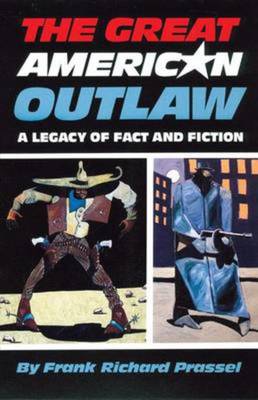
The great American outlaw - Frank Richard Prassel
Oops!
Unfortunately it looks like someone took the last one.
Unfortunately it looks like someone took the last one.
No worries, we have many more interesting finds for you.
Browse similar
Why choose musicMagpie?
Title
The great American outlaw - a legacy of fact and fiction
The great American outlaw - a legacy of fact and fiction
Author
Frank Richard Prassel
Frank Richard Prassel
format
Paperback / softback
Paperback / softback
Publisher
University of Oklahoma Press
University of Oklahoma Press
Language
English
English
UK Publication Date
19960915
19960915
Description
This book explores in depth the
origins, development, and prospects of outlawry and of the relationship
of outlaws to the social conditions of changing times.
Throughout American history you will
find larger-than-life brigands in every period and every
region. Often, because we hunger for simple justice, we romanticize them
to the point of being unable to separate fact from fiction. Frank
Richard Prassel brings this home in a thorough and fascinating
examination of the concept of outlawry from Robin Hood, Dick
Turpin, and Blackbeard through Jean Lafitte, Pancho Villa, and Billy the
Kid to more modern personalities such as John Dillinger, Claude Dallas,
and D. B. Cooper. A separate chapter on molls, plus equal
treatment in the histories of gangs,
traces women's involvement in outlaw activities.
Prassel covers the folklore as well as
the facts, even including an appendix of ballads by and about outlaws.
He makes clear how this motley group of bandits, pirates, highwaymen,
desperadoes, rebels, hoodlums, renegades, gangsters, and
fugitives-who stand tall in myth-wither in the light of truth,
but flourish in the movies. As he tells the stories,
there is little to confirm that Jesse and Frank James, Butch
Cassidy and the Sundance Kid, the Daltons, Pretty Boy Floyd, Ma Barker,
Clyde Barrow and Bonnie Parker, Belle Starr, the Apache Kid, or any of
the so-called good badmen, did anything that did not enrich or otherwise
benefit themselves. But there is plenty of evidence, in the form of
slain victims and ruined lives, to show how many ways they caused harm.
The Great American Outlaw is as
much an excellent survey on the phenomenon as it
is a brilliant exposition of the larger than-life figures
who created it. Above all, it is a tribute to that aspect of
humanity
that Americans admire most and that Prassel describes as a willingness
"to fight, however hopelessly, against exhibitions of privilege."
Why buy with musicMagpie?

FREE 12 Month Warranty on Tech

Magpie Certified Refurbished Tech

FREE Delivery on ALL Orders

14 Day Money Back Guarantee

90 Point Refurbished Quality Check
If you’re looking for something new to listen to, watch or play, look no further than the musicMagpie Store. We sell over half a million new and used CDs, DVDs, Blu-Rays, Games and Vinyl, spanning all kinds of genres and consoles, with prices starting from just £1.09! We also sell a wide range of refurbished Mobile Phones and Tech from major brands like Apple, Samsung, Sony, Microsoft and much more. With a 12 month quality warranty, you can save with total confidence.