










Item out of stock
Selling fast! Item low in stock
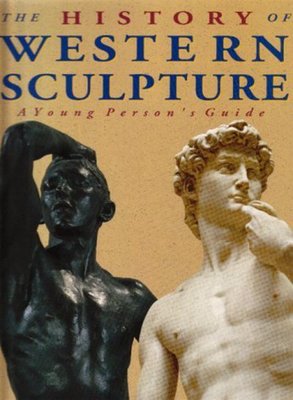
The history of western sculpture - Juliet Heslewood
Oops!
Unfortunately it looks like someone took the last one.
Unfortunately it looks like someone took the last one.
No worries, we have many more interesting finds for you.
Browse similar
Why choose musicMagpie?
Title
The history of western sculpture - a young person's guide
The history of western sculpture - a young person's guide
Author
Juliet Heslewood
Juliet Heslewood
Publisher
Belitha Press
Belitha Press
Language
English
English
UK Publication Date
19940930
19940930
Description
One of a series which presents a complete tour of the world of art for the young reader, this volume concentrates on global sculpture.;The book describes the origin of free-standing marble sculpture in Greece during the beginning of the Olympic games in 776 B.C. which was later followed by the engravings, bas relief and friezes on temples. (The frieze of the Parthenon is the greatest piece of sculpture that survives from the Classical age.);The author reflects that although the Romans collected, copied and admired Greek art they also created sculpture to suit their own needs. They depicted emperors, dignitaries, magistrates, senators in sculptural form. These were an exact likeliness of people, they were realistic whereas the Greek portaits are idealized. It was the Romans who turned buildings such as arches and columns into commemorative art. During the centuries before Christ bronze was used for making sculptures as it survived all weathers. The Celts who survived the force of the Roman Empire created intricate and decorative patterns and gradually changed to include Christian images. By the middle of the 11th Century romanesque sculpture had developed, so called because it looked like ancient Roman sculpture.;Later architect, mason and sculptor were all closely linked in the creation of churches and abbeys. In the 13th Century sculptures seemed to be less rigid, this relaxed style is called Gothic which incorporated the natural world in the architectural sculpture. Gothic and ancient Roman art fused to form a constantly changing style in the Renaissance with the work of Ghiberti and Donatello. In northern Europe in the 15th century wood was used for scultural depictions. The late 15th Century saw sculpture flourish at the hands of Michelangelo, Cellini, Bologna and Bernini. By the middle of the 18th Century it was thought that the best way forward was through science and rational thought which gave rise to Neoclassicism in sculpture.;This was followed in France by Romanticism which tried to express people's inner emotions. Sculpture no longer had to be a scene from the past, the Bible or mythology. This book moves through the era of Impressionasm and its influence on Rodin, Claudel, Maillol and the development of Futurism and abstraction with the work of Brancusi. Sculpture then moved away from carving to the addition of material such as clay with Picasso, Calder and Duchamp, the evolvement of constructivism and vast projects such as the statue of Liberty. Finally the author introduces the work of Elizabeth Frink, Henry Moore, Alberto Giacometti and Carl Andre of the "Pile of Bricks" fame in the Tate Gallery.
Why buy with musicMagpie?

FREE 12 Month Warranty on Tech

Magpie Certified Refurbished Tech

FREE Delivery on ALL Orders

14 Day Money Back Guarantee

90 Point Refurbished Quality Check
If you’re looking for something new to listen to, watch or play, look no further than the musicMagpie Store. We sell over half a million new and used CDs, DVDs, Blu-Rays, Games and Vinyl, spanning all kinds of genres and consoles, with prices starting from just £1.09! We also sell a wide range of refurbished Mobile Phones and Tech from major brands like Apple, Samsung, Sony, Microsoft and much more. With a 12 month quality warranty, you can save with total confidence.