

How are phones made?
Phones are such an essential part of daily life that it’s hard to imagine a world without them. From the first phone ever made to the cutting-edge smartphones we use today, the journey of phone design and production is a fascinating story. But how exactly are phones made and where do they come from? Let’s explore their history, how they’re built and the countries leading the way in manufacturing.
In this blog:
- A quick history of phones
- How modern smartphones are built
- Where are the Samsung phones made?
- Where are the iPhones made?
- What happens to old phones?
A quick history of phones

To really understand modern smartphones, it helps to go back in time. So, when was the first phone made? The answer depends on whether we’re talking about landlines or mobiles. The first phone ever made was invented in 1876 by Alexander Graham Bell, marking the start of voice communication over wires. This invention changed the way people connected with one another and laid the foundations for modern telecommunications.
Decades later, technology advanced far enough to make wireless communication possible. People often ask, when was the first mobile phone made? The very first handheld mobile was created in 1973 by Martin Cooper at Motorola. Cooper and Motorola pioneered cellular technology, which allowed mobile phones to connect to networks through cell towers. This breakthrough paved the way for the kind of smartphones we rely on today. The first commercially available mobile, the Motorola DynaTAC 8000X, launched in 1983. Although it was enormous compared to the slim devices we use now, it was revolutionary at the time.
How modern smartphones are built
Making a smartphone is a multi-step process that begins with design and ends with the device in your hand. First, engineers create a prototype and map out a detailed list of components, from the processor and screen to the battery and camera. Once the design is finalised, specialist factories produce these parts.
The heart of the phone is the printed circuit board, which is built using high-speed machines that place thousands of components onto tiny boards before they are soldered and tested. At the same time, batteries, displays and casings are manufactured separately. These parts are then brought together in large assembly plants, where technicians and machines fit everything together, install the operating system and run quality checks. Finally, the phones are cleaned, boxed and shipped around the world.
What really makes this process fascinating is the range of materials inside every phone. Alongside plastics, glass and aluminium, you’ll also find precious metals and rare minerals. A typical smartphone contains around 16g of copper, 0.35g of silver, 0.034g of gold and a trace of palladium. Other important elements include lithium, cobalt and nickel in the battery, tantalum in capacitors and indium in the touchscreen.
These small amounts may not sound like much, but when multiplied across the billions of phones made each year, they add up to vast quantities of valuable resources. That’s why recycling and refurbishment matter, as it cuts down on waste and reduces the need for new mining.
Where are the Samsung phones made?
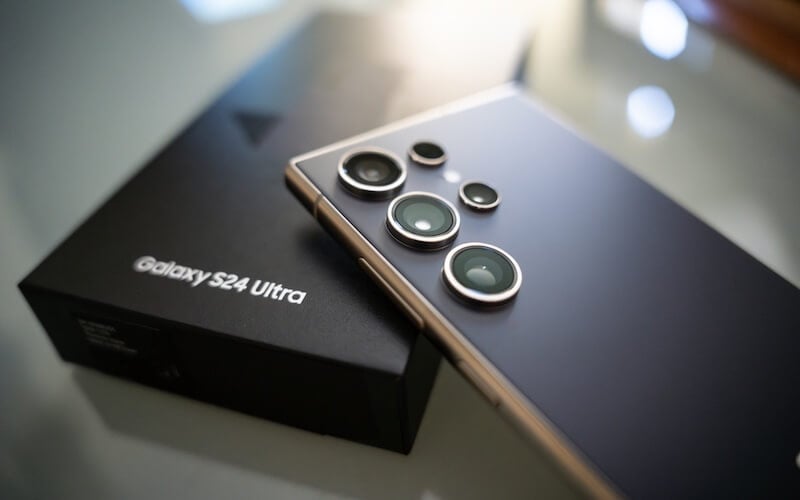
Samsung is one of the world’s largest smartphone manufacturers, and production takes place across several countries. If you’ve ever wondered ‘where are the Samsung phones made’, the answer depends on the model. A large portion of Samsung’s phones are made in Vietnam, which has become a major hub for electronics manufacturing. Samsung also produces devices in South Korea, India and China, and it has smaller facilities in countries like Brazil and Indonesia. By spreading production across different regions, Samsung can meet huge global demand while keeping costs competitive.
Where are the iPhones made?
Apple designs its iPhones in California, but most of the manufacturing happens overseas. The majority of iPhones are made in China, where Apple partners with companies such as Foxconn and Pegatron. These massive factories employ hundreds of thousands of workers and are capable of producing millions of devices every month. In recent years, Apple has also expanded iPhone production into India as part of its effort to diversify supply chains. While the innovation begins in the United States, the sheer scale of manufacturing means that the assembly of iPhones is largely carried out in Asia.
What happens to old phones?
Now you know the answer to ‘when was the phone made’ and ‘how are phones manufactured today’, you might be wondering what happens to older devices. The truth is, even outdated models still have value. That’s why trade-in and refurbishment programmes exist. They give phones a second life, reduce electronic waste and put a bit of extra money back in your pocket.
Whether you’re fascinated by where iPhones phones are made or curious about who made the cellular phone, it’s clear that mobile technology has advanced rapidly in just a few decades.
And while the latest models are exciting, your old devices don’t need to be forgotten. Why not give your phone a new purpose today? Trade in your old phone for cash, or choose a refurbished phone and keep the cycle going.






Recent Comments
on Which British artist has sold the most albums?
on Who is the most popular video game character (based on sales)?
on Which British artist has sold the most albums?
on COVID-19 update: We’re here to help you work, connect and play from home
on COVID-19 update: We’re here to help you work, connect and play from home